

The Path to Medical Wearables
More than Just Smaller Electronics
When it comes to the term wearables, many will immediately think of smartwatches and fitness trackers. In addition to these wearables, which record and evaluate classic biosignals, other portable devices are specialized in specific measurements or even actively conduct therapy. For example, wearables for measuring blood sugar, infusion pumps, and portable defibrillators are designed for specific clinical functions. Unlike smartwatches and fitness trackers, these devices must be medically approved and are subject to higher safety requirements. I would like to explain some requirements for the miniaturized electronics design below.
Requirements
Power Supply
The patient wants a small device with as long a runtime as possible. This is not entirely straightforward, as a wearable typically carries its power supply with it. Unlike stationary devices, energy cannot be continuously drawn from a wall outlet. A large energy storage allows for a long runtime but negatively impacts the size and weight of the wearable. Figure 1 shows the dimensions of an insulin pump compared to the used AAA battery. The battery takes up a considerable part of the volume.
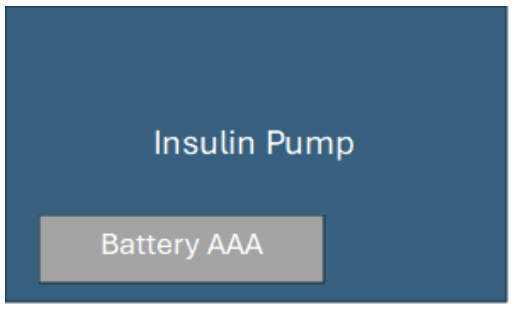
Figure 1: Dimensions of an insulin pump compared to the used battery (image scaled)
Requirements of the IEC 60601-1 Standard for Electrical Safety
The patient wants a small device that is safe regarding electrical hazards. This sounds like a trivial task for a battery-operated device. However, even small currents can pose a risk to the patient. It must be assumed that when attaching the device, the natural protection of the skin is bypassed. The user may be unconscious, and multiple devices could be connected to the patient simultaneously. These circumstances lead to increased requirements for electrical safety. Therefore, the IEC 60601-1 standard defines limits and measures to reduce the risk of electrical hazards to an acceptable level. Measures include, among others, electrical isolations or air and creepage distances, which can negatively affect the size of the wearable.
Functional Safety
The patient wants a small device that does not cause unacceptable hazards in the event of a hardware failure. Functional safety ensures that safety functions operate reliably even when components fail or malfunctions occur. However, this may mean that additional monitoring must be implemented or certain components must be executed redundantly. All these measures require space and negatively impact the size of the wearable.
In summary: In medical wearables, the greatest space requirement often arises not from the actual functional electronics but from the battery, safety measures, and normative requirements.
Implementation
Power Supply
Some wearables allow the internal battery to be charged overnight via USB or a battery-powered charging device, similar to charging a smartphone or in-ear headphones. This enables the use of small energy storage in the wearable. However, this becomes difficult if the wearable should be worn as continuously as possible for successful therapy. Then, operating with replaceable primary batteries or a built-in battery that can be charged as quickly as possible is advisable. Of course, there are also other concepts such as replaceable batteries, charging the battery with a primary battery, or single-use devices with permanently installed primary cells. We have already successfully implemented some of these concepts. Which approach is suitable depends heavily on the therapy requirements. Depending on the application case, a second power source may need to be installed. Certain functions, such as alerting, must also be ensured in the event of a failure.
It is important to know the normative requirements and define application scenarios. For the developed wearables, we were able to evaluate a suitable battery thanks to the defined application scenario. The battery is small and has sufficient capacity for the application. Additionally, through knowledge of the relevant standards in a specific case, we were able to clarify the installation situation for a small battery as a buffer early on.
Requirements of the IEC 60601-1 Standard for Electrical Safety
The IEC 60601-1 defines requirements regarding electrical safety. These can be met through measures such as electrical isolations or air and creepage distances. The required length of the air and creepage distance depends on the electrical voltage present on a conductive part.
Especially when using external chargers that are not classified according to IEC 60601-1, large air and creepage distances may be required on the wearable. This also applies to common USB chargers for consumer products. Since these usually do not have IEC 60601-1 compliant insulation, a high voltage on the USB cable must be assumed in the event of a fault. With air and creepage distances or appropriate electrical insulation, the risk of electrical hazards can be minimized. Furthermore, the concept for charging a wearable can reduce the risk of hazards. Charging via a USB charger during active therapy poses a certain risk to the patient. If simultaneous charging during therapy can be prevented, charging poses a smaller hazard than if the wearable is charged during active therapy. Thus, we were able to reduce the required air and creepage distances on a wearable by constructively preventing the connection of the USB cable during therapy.
A critical role is played by the part referred to as the application part according to the standard. The application part represents the physical interface to the patient and is essential for successful therapy. Additionally, the application part of a wearable is usually in contact with the patient. Depending on the classification of the application part, it must be ensured that no high currents flow through the application part to the patient, and conversely, no high currents flow from the patient through the application part. This would be the case if the patient is already in contact with mains voltage due to a first fault and the wearable would provide a current flow to ground. This must be prevented with appropriate measures, compliant with 250VAC. The required air and creepage distances are very large at a voltage of 250VAC. In the past, we were able to protect the application part through electrical isolation. The isolation could be designed smaller than the required air and creepage distances.
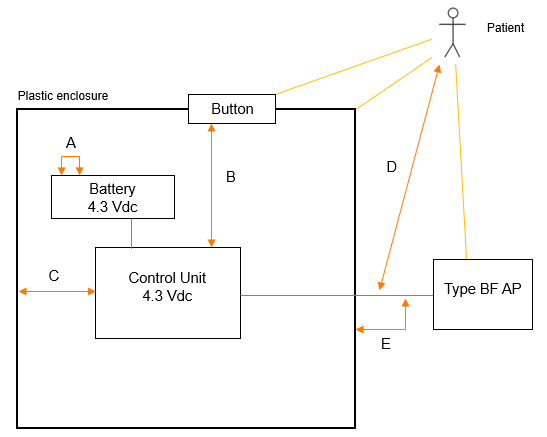
Figure 2: Example of an isolation diagram
To keep track of all these risks regarding electrical safety, it is advisable to create an isolation diagram as shown in Figure 2. This can be sketched as a block diagram or as an abstract design. This makes the required distances or isolations visible. These must be considered when miniaturizing a medical wearable. Distances can be reduced, for example, with appropriate insulation in the form of insulating housing parts or in the form of protective coatings directly on the circuit board. There are also proposals from the responsible group WG 42 that the future 4th edition of IEC 60601-1 will reduce the required distances and approach IEC 60664. However, even if the requirements for distances are relaxed, it will still take several years before the 4th edition comes into effect.
Functional Safety
The analysis of functional safety should be conducted at an early stage. The analysis may conclude that additional components are necessary. For example, if a function is to be executed redundantly or certain parts of the electronics need to undergo periodic self-testing. With a classic FMEA, we were able to assess in the past which measures need to be taken on the electronics design. This allows for early planning of additional space requirements or the removal of unnecessary components.
Electronics Design
Thanks to modern circuit board technologies and increasingly smaller components, it is possible to accommodate electronics in an astonishingly small area. HDI circuit board technology and components with 0.4mm or even 0.35mm ball grid arrays are common. Rigid-flex circuit boards are also used if the given installation situation requires it or if the entire volume is to be utilized. A typical HDI circuit board structure with a flexible core for a rigid-flex application is shown in Figure 3.

Figure 3: HDI circuit board structure with a flexible core for a rigid-flex application
Conclusion
Thanks to compact electronic components and the corresponding circuit board technologies, small medical wearables are partially possible. However, specific attention must be paid to power supply, normative requirements, and functional safety as early as possible in the project timeline. These three points, alongside the therapy-relevant function, have a significant impact on the size of the design. An early analysis of these aspects allows for the selection of the right technical concepts and the planning of the optimal installation situation.
Successful miniaturization therefore does not mean compromising on safety or functionality, but rather achieving the optimal balance between size, runtime, reliability, and patient safety through thoughtful concepts and solid knowledge of standards.
When designing a medical wearable, numerous technical and regulatory requirements must be considered. We at CSA can draw on experience and are happy to support you in developing suitable electronics.

Thomas Scheidegger
BSc BFH in Electrical and Communication Engineering Hard- & Embedded Software Engineer
About the author
Thomas Scheidegger has been working for almost eight years as an Embedded Hard- & Software Engineer at CSA Engineering AG.
His focus is on the development of custom hardware designs.
His expertise has been significantly applied in various projects in the Medizintechnik sector. He supports companies in the conception and development of modern medical products.